GOOD RELATIONS AND VOLUNTEERING TOOLKIT
Volunteering and Belonging Together
We hope this Toolkit will not just help them (our volunteers) develop knowledge and skills but also add to their enjoyment of their volunteering experience.

FOREWORD
We are delighted to produce this good relations Toolkit with support from The Executive Office.
If the Toolkit is your starting point for encouraging volunteers to think about good relations and diversity, we hope it will provide you with material to explore the issues and enhance your practice; to have useful, challenging and enjoyable sessions; and that it also provides sufficient further information for future work with volunteers.
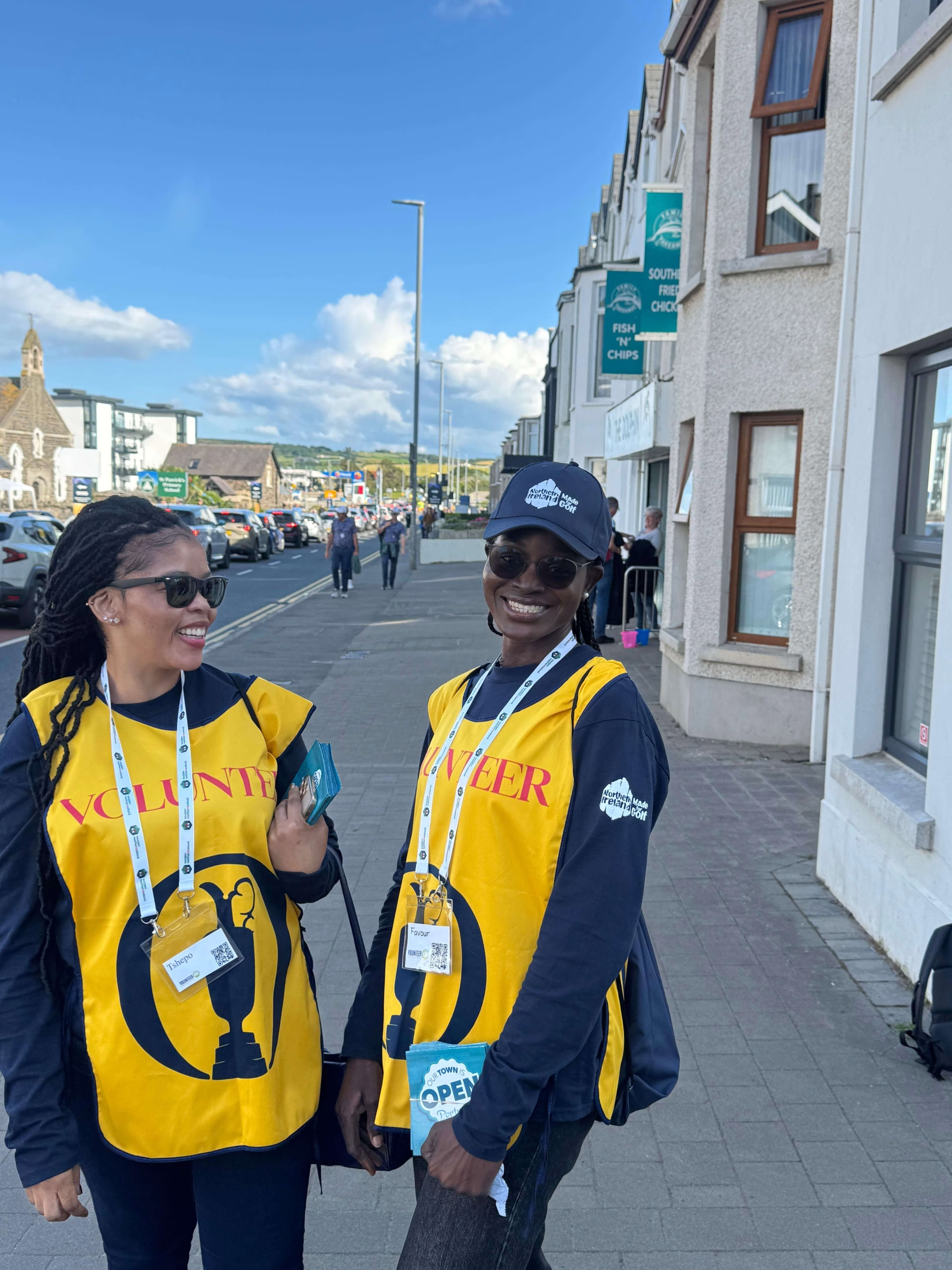
Making a difference to peoples’ lives is what motivates all of us but we cannot ignore the changing nature of local communities and the evolution of this place we all call home. As our local communities change so must we, as we seek to further embed good relations within the fabric of our organisations.
It is, of course, also about giving back to our volunteers – and we hope this Toolkit will not just help them develop knowledge and skills but also add to their enjoyment of their volunteering experience.
We hope the Toolkit helps you to further stimulate the interest and passion of your volunteers and complements the work of your organisation; whilst supporting The Executive Office as it continues to deliver the regional strategy, Together: Building a United Community.
Denise Hayward
Volunteer Now
People are not defined by hatreds but by our common humanity. We hope this Toolkit further embeds the principles of good relations within organisations and helps in the continued development of those community heroes who volunteer their time.
NI Executive Office
WHAT IS GOOD RELATIONS?
In Northern Ireland good relations is defined in Section 75(2) of the Northern Ireland Act, 1998, that followed the conclusion of the Good Friday Belfast Agreement. It highlights…
…the desirability of promoting good relations between persons of different religious belief, political opinion or racial group
In other words, it is to do with preventing racism and sectarianism by developing relationship and understanding between people from different backgrounds.
Good relations is about understanding the importance and benefits of diversity and committing to the principle that diversity enriches everyone, that everyone belongs equally in this place that we call home

Three core values
There are three core values when working on good relations – equity, diversity and interdependence. These values provide the core basis for good relations work.
Equity
A commitment at all levels within society to ensuring equality of access to resources, structures and decision-making processes and to the adoption of actions to further support and pro-actively facilitate those that do not have equal access.
Diversity
Seen in the ever-changing variety of community and individuals’ experiences. Respect for diversity affirms the value which can be derived from the existence, recognition, understanding and support of difference.
Interdependence
Recognition by different interest or identity groupings of their obligations and commitments to others and of the inter-connectedness of individual/community experiences and ambitions leading to the development of a society which is at once cohesive and diverse.
These values are not about diluting, interfering in, or forcing change in anyone’s own core beliefs and values.
Quite the opposite – good relations embraces peoples’ differences as important parts of a diverse community.
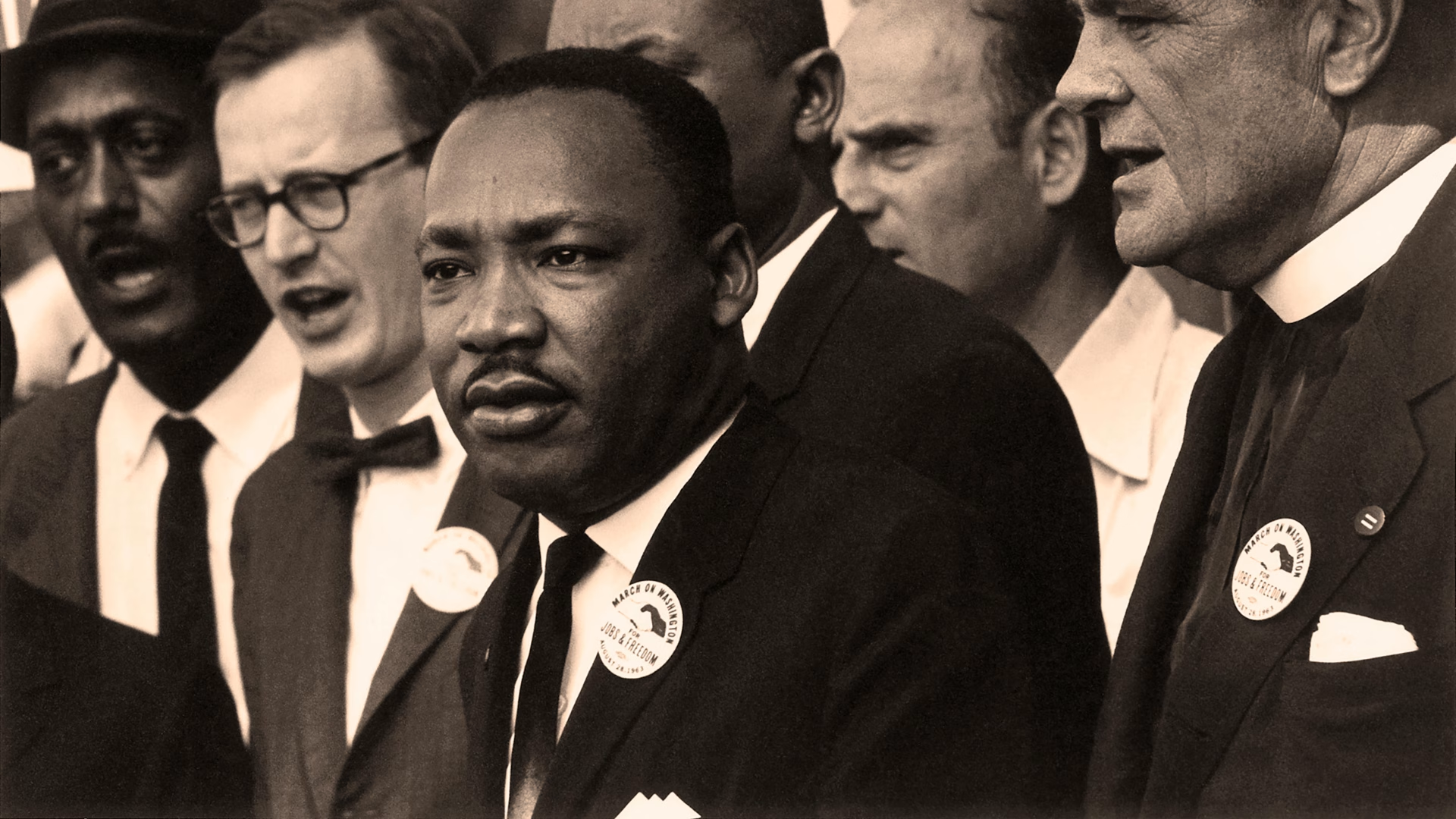
To those that are divided that think in “them” and “us” ways remember…”that their destiny is tied up with our destiny… that their freedom is inextricably bound to our freedom. We cannot walk alone.”
Building a more cohesive community
One of the most significant ways the three values can be expressed was during the “I Have a Dream” speech by Martin Luther King in Washington DC at the rally for freedom and jobs in August 1963 – he was talking about relations between white and black people in the USA but could have been referencing any area, region or country where division existed.
In Northern Ireland, to build a more cohesive community, we cannot walk alone in resolving our differences regardless of political, religious or ethnic background.
GOOD RELATIONS IS ALSO ABOUT
THE HEAD, HEART AND HAND

Head
Knowing the facts and being able to challenge racism and sectarianism when it occurs.

Heart
Helping people communicate our common humanity, that most people and faiths want other people treated how we ourselves want to be treated.

Hand
Asking people to embark, hand in hand, on a journey that will enrich themselves and enrich the communities within which they volunteer by…
Volunteering and Belonging Together.
In Northern Ireland we define good relations as racism and sectarianism. What are they?
Racism…
Is someone behaving in a way that may lead to prejudice, discrimination or antagonism toward other people because of different characteristics such as the colour of their skin or cultural beliefs. However, racism can be a deeper problem than that – it can be structural or systemic.
Sectarianism…
Is someone so strongly supporting one political or religious group that it may lead to prejudice, discrimination or antagonism toward another political or religious group.
Sectarianism is often regarded as a sub-set of racism and, like racism, can become structural or systemic where it has been happening for so long that behaviours become “normalised”.
HOW TO USE THIS TOOLKIT
This Toolkit will help you introduce diversity amongst volunteers. Learning about and from others enriches everyone.
In the pack you will find:
- Advice and guidance about holding good relations and intercultural events and activities;
- Information about the main faiths in an ever-evolving Northern Ireland;
- Information about discussing good relations and intercultural issues;
- Some fun activities and exercises to introduce good relations to volunteers in an inter-active way;
- Myth busting challenges;
- Worksheets to help you facilitate discussion as a result of the activities;
- Case studies of community organisations already engaged in good relations work with their volunteers;
- Advice on where to go for help and further support.
Dip in and out of the Toolkit as relevant to your organisation whether with volunteer sessions or in organising more inclusive events, and monitoring your organisation for its diversity.
What you’ll achieve:
- Develop a better understanding of good relations by staff and volunteers;
- Encourage everyone to move beyond tolerance
If you want to achieve longer and more challenging good relations work, or if volunteers wish to have a longer personal development experience, there are contacts provided at the end of the Toolkit.
MONITORING FOR DIVERSITY?
This region is becoming ever more diverse, enriching us all as people make it their home, from all over the world.
So, as organisations working within those communities, we want to make sure we are as inclusive as possible, properly reflecting the people that we seek to serve and support.
There are real benefits to organisations if it is done right:
- How do we know that our organisation is inclusive if we do not know who attends?
- How do we know that our outreach and promotion is being accessed by everyone if we do not ask?
- How do we know whether people who drop out are not put off by something relevant to their community background, if we do not know who drops out or why?
- How do we know where to improve if we do not ask people?
- How do we know we are making a difference if we do not ask everyone?
In good relations, monitoring and evaluation does not facilitate attitudinal change – that is for those delivering activities and projects. Monitoring provides a snapshot which can be used at once to improve what organisations deliver or help organisations make sure they are inclusive of the community around them.
Click here for examples of community background monitoring questions you might ask – but it is up to you whether you do and how you do it. Make sure you tell people why you are doing it, i.e. identifying barriers; ensuring that you are welcoming and inclusive and giving them the option of:
- Not filling out any question they do not wish to answer;
- Answering questions in private and in confidence.
You need to ensure that you are meeting confidentiality and data protection legislation.
MAIN FAITHS EXPLAINED
In Northern Ireland there are many people from different faiths and many people of no faith.
All of those different faiths have much more in common than they have which is different.
- Common threads of compassion about how to treat other people.
- Demonstrate compassion towards each other regardless of background or belief.
- Promote the inclusion of others.
Read more about the main faiths
The following summary highlights the beliefs of the main faith traditions that are organised and practised in Northern Ireland.
Organising a Diverse Event
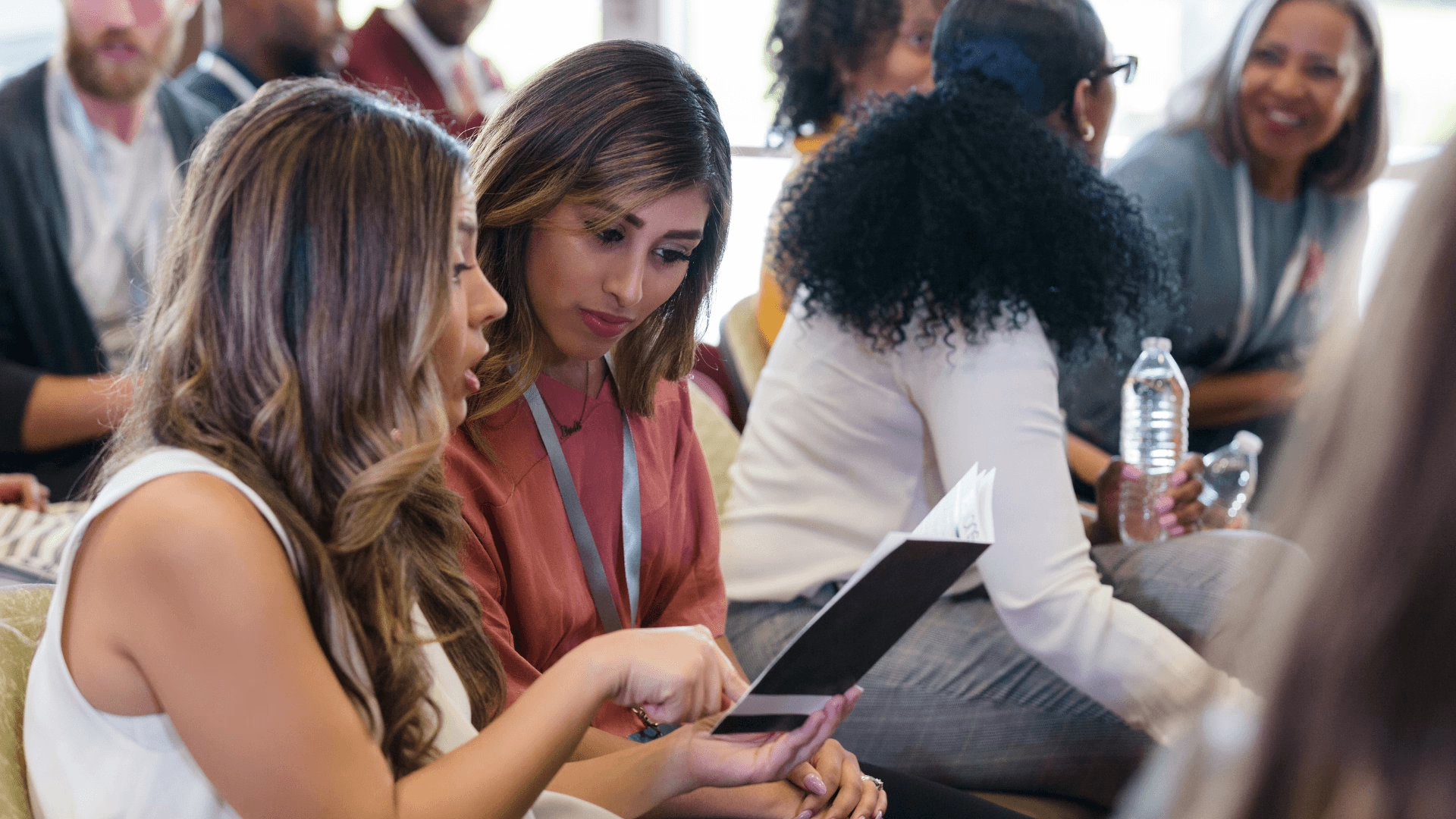
There are many things to consider if organising an event especially if people from diverse backgrounds are attending or you hope will attend. We have summarised a few of the key considerations:
Organising a Diverse Event
Top Ten Reminders
Do and Don’t
What if?
EVENTS AND ACTIVITIES
In this Toolkit we have included five exercises and activities to undertake with volunteers as an introduction to good relations.
They are mainly sessions that might last for one hour. However, as they are based on inter-activity and discussion the length of time needed will depend on how the session is facilitated and how engaged the group is.
Worksheets
The quizzes are linked to worksheets that in a fun and interactive way raise some important topics. The worksheets suggest ways to open the conversation further with participants.
Key Messages
After each activity, some topics for discussion are suggested relating to the key messages.
Exercises
Exercise 1
Catch Yourself On
Exercise 2
Myth Busting
Exercise 3
General Good Relations Quiz
Exercise 4
Preparing for Inclusion
Exercise 5
Reflection Who Belongs
Exercise 6
Magnificent 7 Challenge
FURTHER ASSISTANCE
If you would like to reach out to an organisation for further assistance on any of the issues raised here, to ask for speakers or visitors to your youth group, here are some suggestions.
This does not cover all organisations that may be of assistance, but it is a starting point.
Contacts
There are a number of regional organisations that will help you develop a good relations programme further, some of which have funding to help you develop a programme. These include:
Regional – Volunteer Now
Skainos Centre
239 Newtownards Road, BT4 1AF
Tel: 028 9023 2020
info@volunteernow.co.uk
www.volunteernow.co.uk
Community Relations Council
2nd Floor, Equality House
7-9 Shaftesbury Square
Belfast, BT2 7DP
Tel: 028 9022 7500
info@nicrc.org.uk
www.community-relations.org.uk
The Executive Office
Good Relations and T:BUC Division
Castle Buildings, Stormont
Belfast, BT4 3SR

Local
At a local level, the 11 Councils all have good relations officers and programmes, including funding, to help local organisations develop and deliver good relations work. They also offer advice and guidance. Ask for the good relations officer(s):
| Council Area | Telephone | |
|---|---|---|
| Antrim and Newtownabbey | 028 9034 0000 | goodrelations@antrimandnewtownabbey.gov.uk |
| Ards and North Down | 0300 013 3333 | goodrelations@ardsandnorthdown.gov.uk |
| Armagh City, Banbridge and Craigavon | 0300 0300 900 | mary.toal@armaghbanbridgecraigavon.gov.uk |
| Belfast | 028 9032 0202 | goodrelations@belfastcity.gov.uk |
| Causeway Coast and Glens | 028 7034 7034 | good.relations@causewaycoastandglens.gov.uk |
| Derry City and Strabane | 028 7125 3253 | Carol.Stewart@derrystrabane.com |
| Fermanagh and Omagh | 0300 303 1777 | goodrelations@fermanaghomagh.com |
| Lisburn City and Castlereagh | 028 9244 7300 | lynsey.gray@lisburncastlereagh.gov.uk |
| Mid and East Antrim | 0300 124 5000 | fiona.surgenor@midandeastantrim.gov.uk |
| Mid Ulster | 0300 013 2132 | philip.moffett@midulstercouncil.org |
| Newry City Mourne and Down | 0330 137 4000 | martina.flynn@nmandd.org |
FURTHER ASSISTANCE
Volunteer Now has a range of publications on its website that will support this work.
This Toolkit have been developed to support the promotion and development of good relations and should be used as a principal resource.
For key publications to support your work search:
Investing in Volunteers is a quality standard for volunteer management and consists of six Quality Areas against which volunteer involving organisations can benchmark themselves. The framework is free to download and use:

REMINDER QUESTIONS
Before you go, here are some questions to help you reflect on what you’ve read and think about what you’d like to do next.
The Investing in Volunteers (UK) standard includes Volunteer Inclusion as one of its six quality areas, and using it as a benchmark can give you extra direction and support as you build more inclusive volunteering practice.
We hope you’ve found this Toolkit helpful. If you’d like any extra guidance or support, please don’t hesitate to reach out.
